
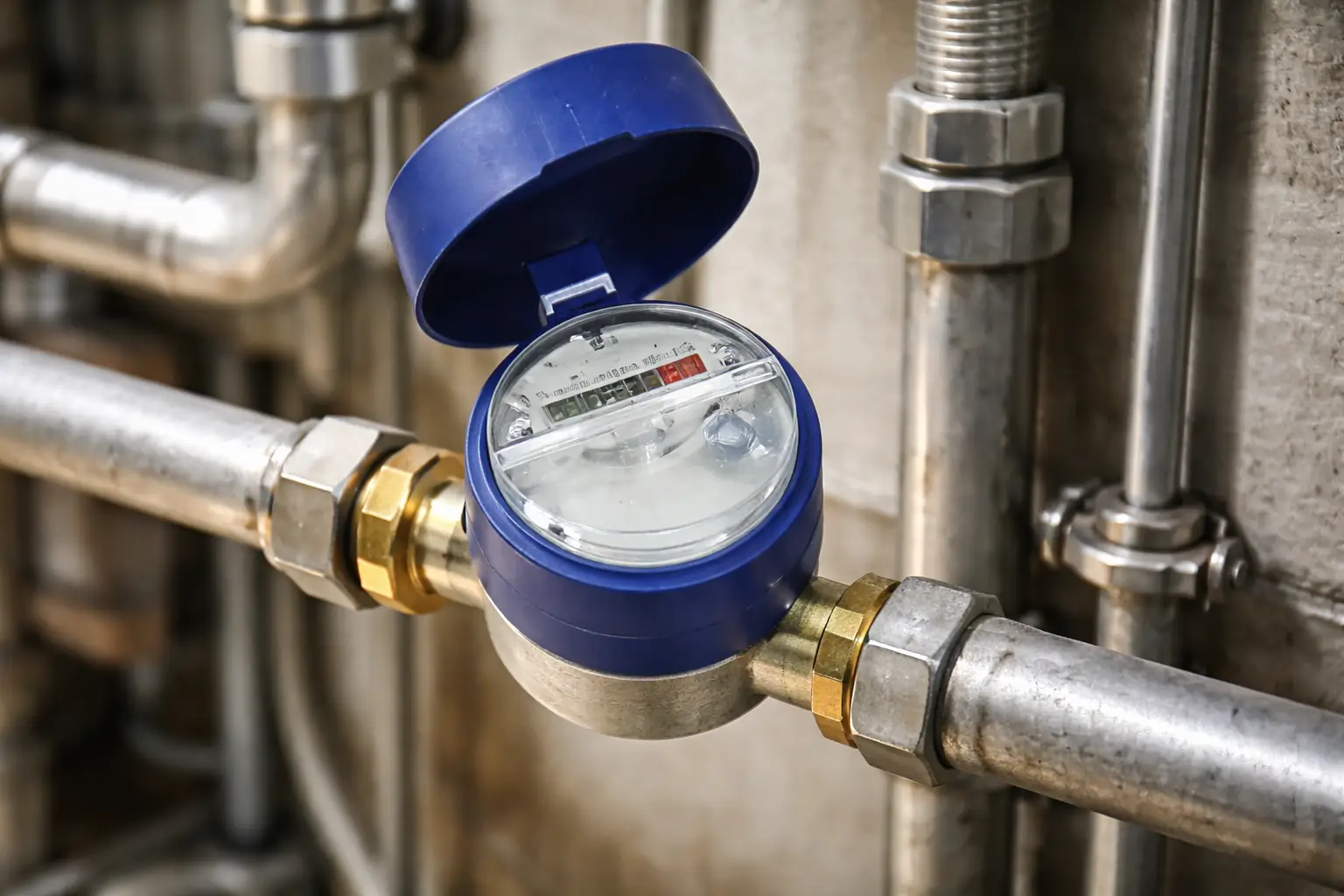
TL;DR: Choosing the right flow meter comes down to three checks: the fluid, the accuracy you actually need, and what your installation can support. When those are aligned, the data stays consistent, maintenance stays manageable, and you can trust the number when it matters.
Key Takeaways:
- Start with the fluid and note conductivity, solids, bubbles, and whether the pipe stays full.
- Set accuracy to the job, because trending, allocation, and billing do not need the same level of certainty.
- Let the pipe decide what is realistic, including straight run, access, shutdown limits, and temperature and pressure.
- Watch the common bad fits early, especially aeration, coatings, viscosity swings, and oversizing.
Choosing a flow meter should feel simple, but the wrong pick usually looks “fine” right up until the first shutdown, the first wet cabinet, or the first audit question you cannot answer. This selection guide gives you a practical way to match the fluid, the accuracy target, and the install constraints to a meter type, with clear “bad fit” warnings so you can avoid expensive do overs.
Start Here: 3 Key Inputs
A flow meter choice is rarely about brand or price first, even if that is how projects get discussed. It is about what you are measuring, how sure you need to be, and what the pipe will allow you to do.

Input 1: What is the fluid and what does it do in a pipe
Start with the fluid and write down what can affect measurement. Note if it is conductive, if it carries solids, if air or bubbles are present, and whether the pipe is always full.
Input 2: What does “accuracy” mean for your job
Pick an accuracy target that matches what the number will be used for. Billing and batching usually need tighter accuracy than process trending, so set the bar based on the cost of being wrong.
Input 3: What will the installation let you get away with
Confirm what the pipe and site conditions allow before you choose the meter. Check straight run, access for maintenance, temperature and pressure, hazardous area requirements, and whether you can shut down the line.
Choose by Fluid First
This section is the quickest path to a short list. If you only read one part, read the “bad fit” warnings under each fluid.
Clean water and clean process liquids
For clean liquids, compare ultrasonic and electromagnetic based on conductivity and whether you can install in line. If shutdown is hard, clamp on ultrasonic can help, but watch for air and turbulence, and remember electromagnetic needs a conductive liquid and a full pipe.
Dirty water, wastewater, and liquids with solids
For dirty or solids laden lines, electromagnetic is usually a safe first pick for conductive fluids. Prioritise easy cleaning or isolation, avoid turbine and other mechanical meters, and only use clamp on ultrasonic if the pipe condition and flow profile are stable.
Oils, fuels, and other non conductive liquids
For oils, fuels, and other non conductive liquids, rule out electromagnetic and shortlist ultrasonic, turbine, positive displacement, or Coriolis based on viscosity and accuracy needs. Pick Coriolis for mass flow or tight batching, and be cautious with turbine and ultrasonic if viscosity shifts or bubbles are present.
Choose by Accuracy Target
If the fluid points to three possible technologies, accuracy and measurement purpose usually decide the winner. This is also where people accidentally pay for specs they cannot realise in the real pipe.
Trending and control
If you need reliable trends, prioritise repeatability and a stable signal over chasing the tightest brochure accuracy. A well installed meter with solid diagnostics will beat a premium meter fitted poorly.
Allocation and chargeback
When the number drives allocation, consistency matters because small errors turn into disagreements. Electromagnetic, well installed ultrasonic, or correctly applied differential pressure can work, depending on the fluid and the piping constraints.
Billing and compliance
When the number affects revenue or compliance, choose a meter with a clear calibration plan, traceability, and realistic uncertainty for your site. If you want a simple breakdown of what calibration and verification typically includes and how often to do it, see this guide: flow meter calibration and verification in Singapore.
Choose by Installation Constraints
This is where the pipe says “no” and forces a different approach. Treat these constraints as decision gates, not afterthoughts.
No shutdown allowed
If you cannot shut down or cut the line, a clamp on ultrasonic flow meter is often the practical first option to evaluate. Bad fit warning: clamp on does not mean plug and play, because poor pipe condition, coatings, or heavy aeration can limit performance.
Tight straight run and messy hydraulics
If you have elbows, valves, pumps, or reducers close to the install point, many technologies will see distorted flow profiles. Bad fit warning: turbine and vortex meters can be very sensitive to upstream disturbances, so they are risky in tight piping layouts unless you can meet straight run guidance.
Small Pipes and Low Flows
At low flow rates, signal to noise becomes the enemy, and some technologies simply do not have enough resolution. Bad fit warning: oversizing is a silent killer, because an oversized flow meter may sit in a range where it cannot measure reliably.

Cooling water, condenser water, and chilled water loops
- Best fit: electromagnetic when the liquid is conductive and the pipe stays full.
- Bad fit warning: if the pipe is partly full or the line sees significant air entrainment, both options need careful review.
Process water with variable quality
- Best fit: electromagnetic when quality swings or solids show up, because it is more forgiving than moving part meters.
- Bad fit warning: do not assume “water” means “clean,” because a little grit can turn a mechanical meter into a maintenance job.
Fuel transfer and batching
- Best fit: Coriolis when accuracy matters and density changes, because it measures mass flow directly.
- Bad fit warning: if you have pulsation, viscosity swings, or contaminated fuel, turbine meters can become a false economy.
Compressed air main headers
- Best fit: thermal mass or differential pressure, but only if they match your real flow range and pressure stability.
- Bad fit warning: a meter selected for peak flow may become blind at normal flow, which makes energy optimisation impossible.
The Mistakes Buyers Keep Making
These mistakes are common because procurement and engineering often work from different checklists. If you avoid these, you will avoid most of the grief.
Mistake 1: Choosing by brochure accuracy. Specs assume ideal conditions, so confirm full pipe, flow profile, and fluid behaviour first, then decide how much accuracy you can actually achieve.
Mistake 2: Ignoring straight run and access. If the profile is unstable or the meter is hard to reach, the data will drift and maintenance will get skipped.
Mistake 3: Forgetting total cost of ownership. The purchase price is the easy part, while downtime, cleaning, calibration, and troubleshooting are what usually cost more.
Mistake 4: Assuming one technology covers every line. No technology wins everywhere, so standardise your decision process, not a single meter type.
Why Choose Minerva
Minerva focuses on one thing: giving you measurements you can trust, so decisions are easier and problems get spotted earlier. With product, application, and engineering know how, we help you select and support solutions that fit the conditions you actually have.
For flow metering, that means practical options across in line and clamp on technologies, and you can view our flow metering range to see what fits your application. We can also support automated meter reading and remote data collection, backed by strong commissioning and long term support so your flow data stays reliable.
Talk to us for sizing and spec, before you commit
If you tell us your fluid, pipe size, operating range, temperature and pressure, straight run reality, and whether shutdown is possible, we can recommend the right flow meter approach and help you size it properly.


