TL;DR: Upgrading your gas detection system can help reduce safety risks, downtime, and maintenance issues when your current setup no longer fits your site. A cost benefit review helps you decide whether to maintain, partially upgrade, or replace the system based on real operating needs.
Key Takeaways
- Upgrade costs depend on gas hazards, site layout, detector type, alarm strategy, installation needs, and maintenance requirements.
- Older systems can still work, but they may miss newer risks if your facility has expanded, changed processes, or introduced new gases.
- A full replacement is not always needed, since targeted upgrades or better maintenance may solve the issue.
- The right system should improve warning speed, alarm visibility, serviceability, and long-term safety confidence.
A Practical Starting Point for Your Upgrade Decision
Upgrading a gas detection system is not just about changing old equipment. It is about making sure your team gets clear warnings, your site stays compliant, and small issues are caught before they turn into costly disruptions.
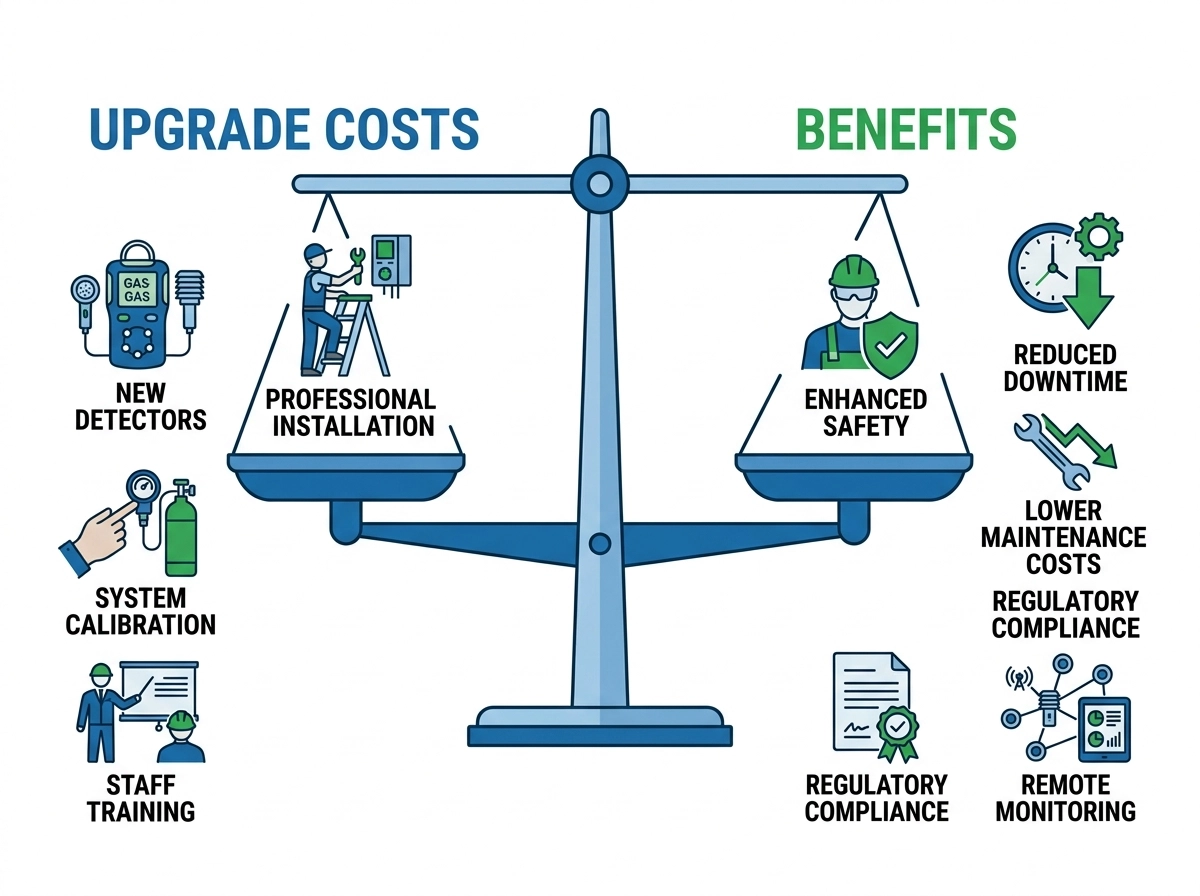
A clear gas detection system cost benefit analysis helps you compare upgrade costs with the real risks of keeping an ageing system in place. For many facilities, the key question is not only “How much will this cost?” but “What could it cost us if the system fails when we need it most?”
Why Gas Detection Upgrades Need a Clear Business Case
A system that worked well years ago may not fit the site today. Layouts change, processes expand, new gases are introduced, and alarm response needs can become more complex. This is why facilities such as laboratories, semiconductor plants, manufacturing sites, marine facilities, power plants, petrochemical sites, and commercial buildings should review gas detection as part of their safety planning.
A full replacement is not always needed. Sometimes, proper calibration, preventive maintenance, or selected detector upgrades are enough, and a cost benefit review helps you make that decision based on facts instead of guesswork.
What Your Upgrade Budget May Include
Upgrade costs vary by site. A small facility may only need a few detectors and a panel, while a larger site may require fixed transmitters, multi-point detection, sampling systems, remote monitoring, and alarm integration. The final cost depends on gas hazards, layout, alarms, installation needs, and maintenance plans.
Detector and system hardware
Equipment cost depends on the gas, detection range, sensor type, alarm setup, and site conditions. Portable, fixed, specialty, and open path gas detectors each serve different needs, so it helps to compare available gas detector products before choosing the setup that fits the risk and workplace.
Installation and site integration
Installation is more than mounting detectors. It may involve cabling, power supply, alarm panels, and links to systems your team already uses. Some sites also need connections to ventilation controls, interlocks, remote monitoring, or building management systems, so planning these details early helps avoid rework and keeps the upgrade smoother.
Testing, commissioning, and training
Testing confirms that detectors, alarms, panels, and response outputs work as planned. Training helps operators and maintenance teams understand each alarm, respond correctly, and report faults clearly, so the system is not just installed, but ready to support real site conditions.
Maintenance and calibration
Gas detectors need regular care because sensors can drift, filters can clog, and sampling lines can be affected by dust, moisture, or process conditions. A newer system can make maintenance easier with clearer diagnostics, easier calibration, better parts availability, and more stable sensor performance.
Where the Upgrade Starts Paying Back
The value of a gas detection upgrade often shows up in daily operations. Teams get clearer alerts, fewer faults, easier maintenance, better records, and less disruption when something needs attention.
- Earlier warning for real site hazards: A well-planned system helps alert teams before a leak or unsafe atmosphere becomes serious, especially in gas storage rooms, laboratories, cleanrooms, process areas, utility rooms, confined spaces, and unmanned areas.
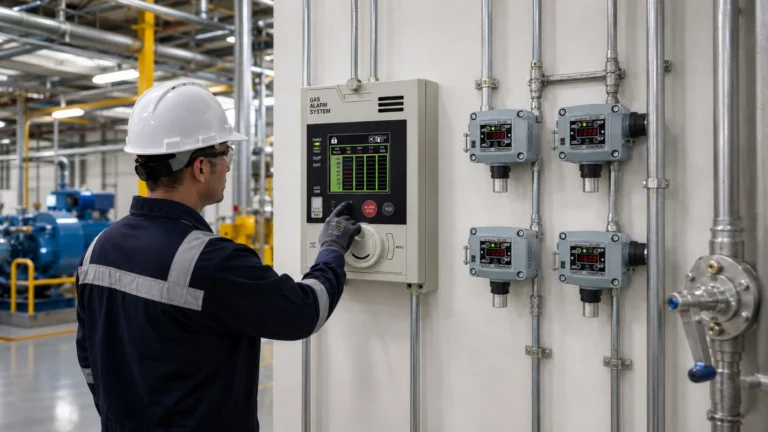
- Alarms that reach the right people: Older systems may rely on local alarms that are easy to miss. Upgraded systems can support central panels, remote monitoring, SMS alerts, building system links, and other alarm pathways.
- Less downtime from gas-related incidents: Better detection can help reduce production stoppages, investigations, retesting, and delays by improving alarm speed, detector reliability, and response coordination.
- Stronger support for audits and safety reviews: Better records and clearer alarm history help EHS teams manage audits, inspections, internal reviews, and incident follow-ups with more confidence.
- Lower maintenance pressure: Newer systems can reduce repeated faults and service issues through better diagnostics, easier calibration, improved parts availability, and stronger long-term support.
- Better visibility across the facility: Many modern systems can show detector status, fault records, alarm history, and event trends, helping teams spot recurring issues before they grow.
Signs Your Current System May Be Holding You Back
Review your gas detection system if it no longer matches your site’s risks, layout, or daily operations. A system may still turn on and alarm, but that does not always mean it is fit for today’s conditions.
Watch for signs such as:
- frequent detector faults
- inconsistent calibration results
- weak alarm visibility
- rising maintenance costs
- unavailable spare parts
- outdated panels
- poor documentation
- known blind spots
It is also worth reviewing the system if your facility has expanded, changed layout, added new gases, changed processes, increased after-hours operation, or introduced new safety or reporting requirements. These changes can affect detector placement, alarm response, maintenance access, and overall coverage.
When Maintenance May Be the Better Choice
A full upgrade is not always the right move. If your system is still reliable, within its service life, and suited to your current site risks, continued maintenance may be enough.
In that case, focus on practical upkeep such as:
- scheduled calibration
- preventive maintenance
- staff refresher training
- documentation updates
- spare parts checks
- regular system reviews
This keeps the system dependable without spending on an upgrade before it is needed.
How to Run a Useful Cost Benefit Review
Start by reviewing what is already installed, including detector types, gases monitored, alarm points, panel locations, calibration records, fault history, maintenance needs, and coverage areas. Then look for gaps, such as areas with limited detection, alarms that may not reach the right people, detectors in harsh conditions, or sampling lines affected by dust, moisture, or particles.
From there, compare the cost of keeping the current system with the cost of improving it. The best option is not always the most expensive one, but the one that gives your facility the right level of protection, reliability, usability, and long-term support.
Why Choose Minerva for Gas Detection System Upgrades
Choosing the right gas detection system takes more than picking a product from a catalogue. Minerva helps customers look at the gas hazard, site layout, working conditions, alarm response, and maintenance needs before recommending a practical solution.
Minerva supports gas detection, flame detection, environmental monitoring, remote monitoring, and customised system solutions. From personal and portable gas detectors to fixed transmitters, multi-point systems, specialty gas detectors, open path detection, and customised panels, the team helps facilities choose equipment that fits their risks, budget, and day-to-day operations.
Ready to Check If Your System Still Fits?
If your gas detection system is ageing, hard to maintain, slow to alert, or no longer aligned with your operations, it may be time for a proper review.
A system review can show whether you need a full upgrade, selected detector replacement, extra monitoring points, clearer alarm communication, or better integration with existing safety systems.
Contact Minerva today and request a gas detection system review.