TL;DR: Personal gas detectors are best for protecting individual workers as they move through changing risk areas. Portable gas detectors are better for checking specific spaces, leak points, or temporary work areas before and during a task.
Key Takeaways
- Match the detector to the job, not just the product features or price.
- Personal detectors give the wearer a direct alarm when the air around them becomes unsafe.
- Portable detectors help teams test spaces, investigate leaks, and support permit to work checks.
- Many sites benefit from using both, especially for confined space entry, shutdown work, and leak investigation.
Choosing a gas detector is really about protecting the people who step into risky areas every day. When gas hazards are hard to see, smell, or predict, the right detector gives your team the early warning they need to act before the situation becomes dangerous.
For many worksites, the main question is whether personal gas detectors, portable gas detectors, or a mix of both will give the right level of protection. The best choice depends on the work being done, the gases involved, the site layout, and whether the hazard follows the worker or stays in one area.
Understanding Personal Gas Detectors
What a personal gas detector is designed to do
A personal gas detector is worn close to a worker’s breathing zone to monitor the air around them. It is useful for people moving between risk areas because the alarm stays with them and warns them quickly when gas levels become unsafe.
Where personal gas detectors are commonly used
Personal gas detectors are commonly used by workers who move through changing or higher risk areas, such as:
- Confined spaces and poorly ventilated spaces
- Maintenance, inspection, and contractor work
- Fuel systems, chemical storage, and wastewater areas
- Gas cabinets, production lines, and plant operations
- Lone worker tasks where fast personal warning matters
Depending on the model, they can monitor one gas or several gases, including oxygen, carbon monoxide, hydrogen sulphide, and combustible gases.
The main strength of personal detection
A personal gas detector gives workers a warning right where they are, so they can stop work, leave the area, or follow emergency steps quickly. It is not made to monitor an entire room or plant, but to protect the person wearing it.
Understanding Portable Gas Detectors
What a portable gas detector is designed to do
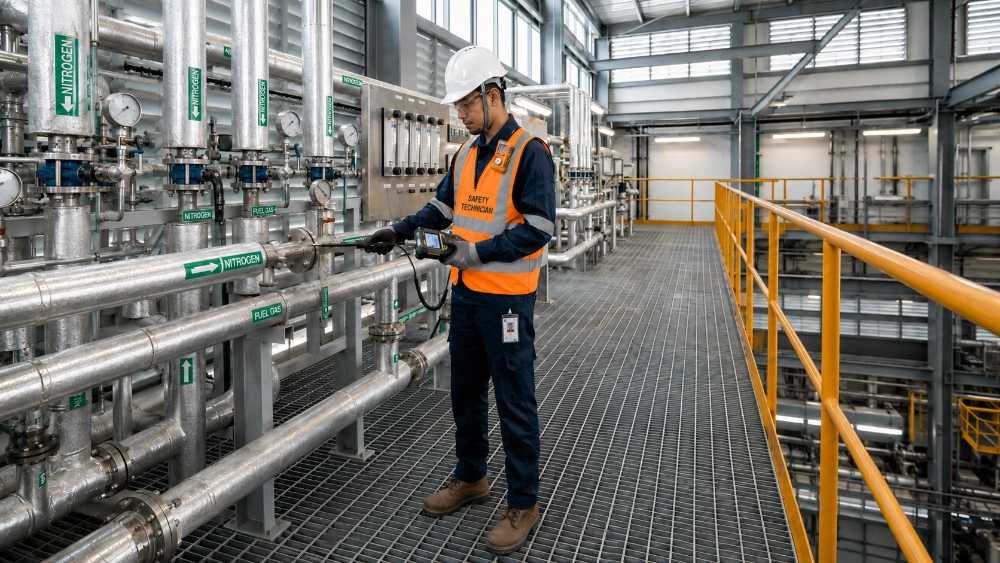
A portable gas detector helps teams check the air in a specific area before or during work. It can be handheld, placed nearby, or used with sampling tools to test hard to reach spaces, investigate leaks, and confirm if conditions are safe enough to proceed.
Where portable gas detectors are commonly used
Portable gas detectors are useful when teams need quick, flexible checks before or during work, especially for:
- Pre entry testing for tanks, vessels, pits, and chambers
- Leak checks around valves, gas lines, joints, flanges, and ducts
- Shutdown work, hot work support, and commissioning
- Temporary monitoring where fixed detectors do not cover the work area
The main strength of portable detection
A portable gas detector is useful because it brings monitoring to the work area, especially when risks are temporary or away from fixed sensors. It supports area checks, but workers entering hazardous spaces may still need personal detectors for direct protection.
Side by Side Comparison for Faster Decision Making
| Factor | Personal Gas Detector | Portable Gas Detector |
| Main role | Protects an individual worker | Checks a work area or task location |
| How it is used | Worn near the breathing zone | Handheld, carried, placed, or used with sampling tools |
| Best suited for | Mobile workers, confined space entrants, technicians, contractors, lone workers | Pre entry checks, leak checks, tank inspection, shutdowns, hot work, temporary monitoring |
| Monitoring style | Continuous personal monitoring | Task based or temporary monitoring |
| Alarm purpose | Warns the wearer directly | Warns the user or work team during checks |
| Coverage | Air around the worker | A selected point, sample line, or temporary work area |
| Common gas options | Single gas or multi gas | Single gas, multi gas, VOC, specialty gas, or application specific sensors |
| Main limitation | Does not monitor a full area | Does not always protect every worker unless used correctly |
When a Personal Gas Detector Is the Better Choice
Choose it when the worker is the main point of protection
A personal gas detector is best for workers moving through areas where gas conditions can change, such as tanks, trenches, process areas, or storage spaces. It gives each person a direct warning when leaks, cleaning, purging, poor ventilation, or maintenance work affects the air around them.
Good applications for personal gas detectors
Personal detectors are useful for confined space entry, inspections, maintenance, contractor work, wastewater operations, and mobile plant duties. They also help workers near fuels, solvents, toxic gases, specialty gases, or oxygen displacement risks, especially in small teams or lone worker situations where a fast personal alarm matters.
When a Portable Gas Detector Is the Better Choice
Choose it when the task needs location testing
A portable gas detector is best when your team needs to check a specific area before work starts. It helps confirm if a space is safe for entry, inspection, repair, or hot work, especially when gas may collect before anyone goes in.
Good applications for portable gas detectors
Portable gas detectors are useful for tank checks, pit inspections, chamber testing, pipeline work, leak investigations, shutdowns, and temporary monitoring. They also support permit to work checks by providing gas readings for specific jobs, especially in areas that do not need permanent monitoring.
Why Many Sites Need Both Types
A simple example from confined space work
Before tank entry, a portable gas detector can test the atmosphere from outside. Once workers enter, personal gas detectors provide continuous protection while the job is underway. This layered approach helps the team check the space first, then protect each person inside.
A simple example from leak investigation
If a leak is suspected around process equipment, a portable detector can help the technician check likely leak points. At the same time, a personal detector protects the technician as conditions change during the investigation.
This combination reduces blind spots. It also helps the team make better decisions during work that can change quickly.
Mistakes That Can Weaken Gas Detection Safety
Buying by price or sensor count alone
A lower priced detector may seem attractive, but it may not match your gases, work conditions, or maintenance needs. Before choosing one, check:
- The gases present on site
- The work conditions and exposure risks
- The right sensor type, not just the number of sensors
- Testing, calibration, and service support
The better question is not “Which detector has the most features?” It is “Which detector gives our workers the right warning for this job?”
Skipping testing, calibration, and maintenance
Gas detectors need regular care to stay reliable, including:
- Bump tests
- Calibration
- Sensor replacement
- Battery and alarm checks
- Service records
A detector that has not been tested may fail when it is needed most. That is why maintenance support matters as much as product selection.
Using the wrong type of detector for the job
Portable detectors should not replace fixed systems when continuous area monitoring is needed, especially if leaks can happen when no one is nearby. Personal detectors also cannot clear a full space before entry. Each device has a specific role, so the safest setup uses the right detector for the task.
Giving workers equipment without enough training
Workers must know what alarms mean, how to read gas levels, when to leave, and how to follow site procedures. Training should also cover detector limits, including response time, sensor range, and sampling method, so the equipment is used correctly when it matters most.
Why Choose Minerva for Gas Detection in Singapore and Malaysia
We help businesses choose gas detection solutions that fit real site conditions, from gas detection and environmental monitoring to remote monitoring and engineering support. Our focus is simple: protect people, support safer decisions, and make safety systems easier to manage.
We also supply a wide range of gas detector products, including personal, portable, fixed, open path, gas detector tubes, environment monitors, and custom solutions. With design, integration, calibration, maintenance, and servicing support, we help clients build reliable gas detection setups for long term site safety.
Speak with Minerva Before You Decide
Not sure whether your worksite needs personal gas detectors, portable gas detectors, fixed monitoring, or a combination of all three? Minerva can help you review your gas hazards, work activities, and monitoring needs before recommending a suitable solution.